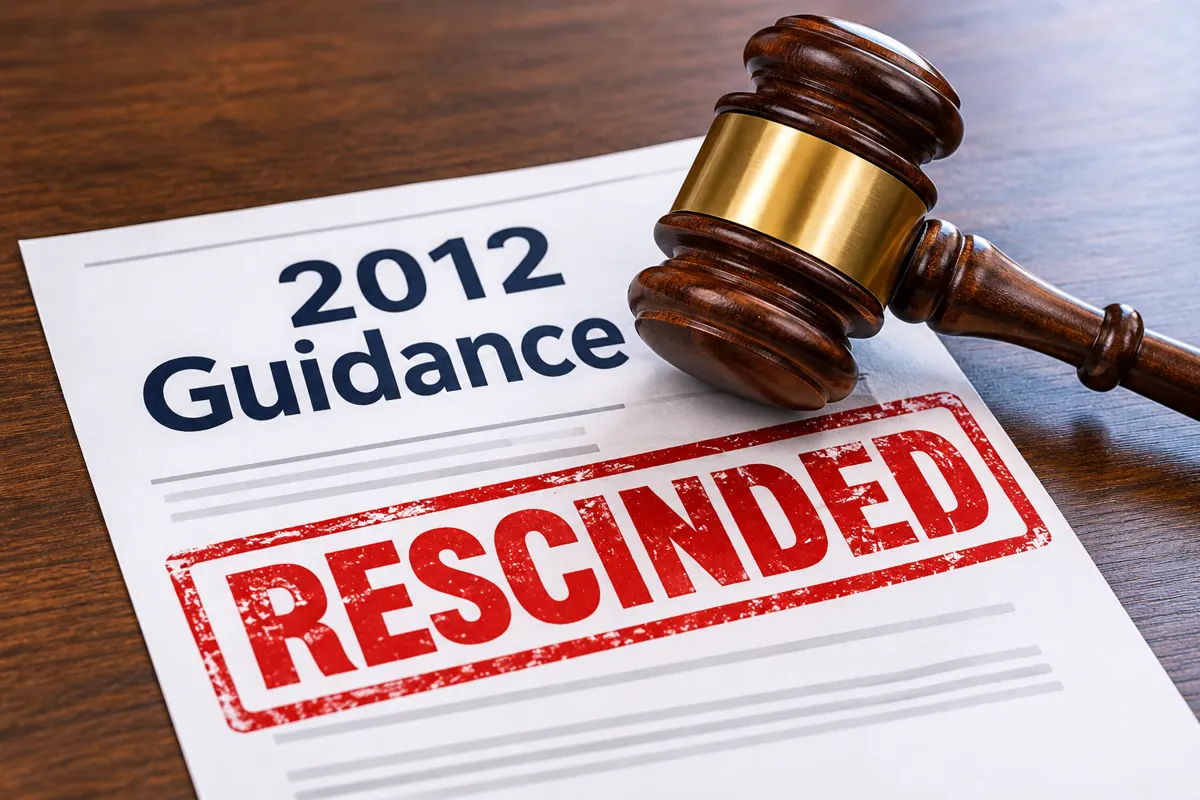
On October 28, 2026, the Equal Employment Opportunity Commission voted 2–1 to rescind its 2012 Enforcement Guidance on the Consideration of Arrest and Conviction Records in Employment Decisions Under Title VII, effective immediately. For employers who run background checks, this is a significant shift worth understanding.
What the 2012 Guidance Did
The 2012 guidance encouraged employers to conduct individualized assessments before disqualifying an applicant based on criminal history. That meant weighing factors like the nature of the offense, how much time had passed, and whether the crime was relevant to the specific job. Employers who used blanket exclusion policies risked EEOC scrutiny on the grounds that criminal history can disproportionately screen out minority applicants, potentially creating disparate impact liability under Title VII.
The guidance influenced hiring practices across the country and helped fuel the ban-the-box movement.
What the Rescission Means
With the guidance off the books, the EEOC no longer has a formal federal position on how employers should handle criminal history in hiring. Employers have more flexibility to structure their own policies without EEOC enforcement guidance looking over their shoulder. As Polsinelli notes, this marks a broader shift toward neutral employment decision-making at the federal level.
The EEOC was clear that Title VII itself still applies. Using criminal history as a deliberate proxy for race or national origin remains illegal. But the prescriptive framework that told employers exactly how to analyze a record, and when not to use it, is gone.
What Stays the Same for Connecticut Employers
If your company operates in Connecticut, your day-to-day obligations are largely unchanged, because the rules that matter most come from state law and the FCRA, not EEOC guidance:
- Ban the Box. Connecticut’s ban-the-box law still bars criminal history questions on initial job applications, unless a law requires them or the job needs a fidelity bond.
- Erased records. Records erased under Connecticut law, including Clean Slate, still can’t be used against an applicant.
- Hartford and New Haven. Both cities have their own ban-the-box rules for city hiring, and those rules also reach businesses that work as city vendors or contractors.
- The FCRA. Disclosure, authorization, and the two-step adverse action process are federal law and haven’t changed.
The practical advice for Connecticut employers: continue following state law, document your hiring criteria, and work with your background screening provider to make sure your process is consistent and defensible. Our Connecticut background check guide covers each state rule.
The Takeaway
As Sheppard Mullin puts it, employers should not overcorrect. This is a meaningful shift in the federal enforcement landscape, but it is not a green light to ignore criminal history considerations entirely. Smart employers will use this moment to revisit their policies with legal counsel rather than assume anything goes.
Questions about how criminal background checks fit into your hiring process? We’re here to help.
Related reading: Connecticut Background Checks for Employers: A Complete Guide · Adverse Action in Background Checks · Should You Hire Someone With a Criminal Record?
Need FCRA-Compliant Background Checks?
Research Services has helped employers hire safely since 1996 with PBSA-accredited screening, no contracts and no minimums.

Rich has worked in background screening since 2008, holds an Advanced FCRA Certification, and writes about employer compliance. See all posts by Rich →