Verify Academic Credentials
Education verification confirms that a candidate holds the degree, diploma, or certificate they've listed on their application. Research Services contacts the academic institution directly — or via the National Student Clearinghouse where available — to verify the claim on your behalf.
This service covers all levels of education, including high school diplomas, associate's degrees, bachelor's degrees, graduate degrees, and professional certifications from accredited institutions.
- Domestic and international institutions
- All education levels: diploma through doctoral
- Minimum 3 contact attempts per verification
- FCRA-compliant reporting
Turnaround Time
Most education verifications are completed within 1–4 business days, with a minimum of 3 contact attempts made to the institution.
Turnaround may vary based on institution response times, particularly for international schools or institutions that process verifications manually.
1–4 Business Days
What's Returned
Diploma Mills & Credential Fraud
Diploma mills are organizations that sell academic degrees with little or no coursework required. A candidate may list a degree from a real-sounding institution that is actually unaccredited or fraudulent. Education verification will surface these discrepancies.
Research Services verifies accreditation status and confirms credentials through direct institution contact, protecting you from hiring candidates who misrepresent their academic background.
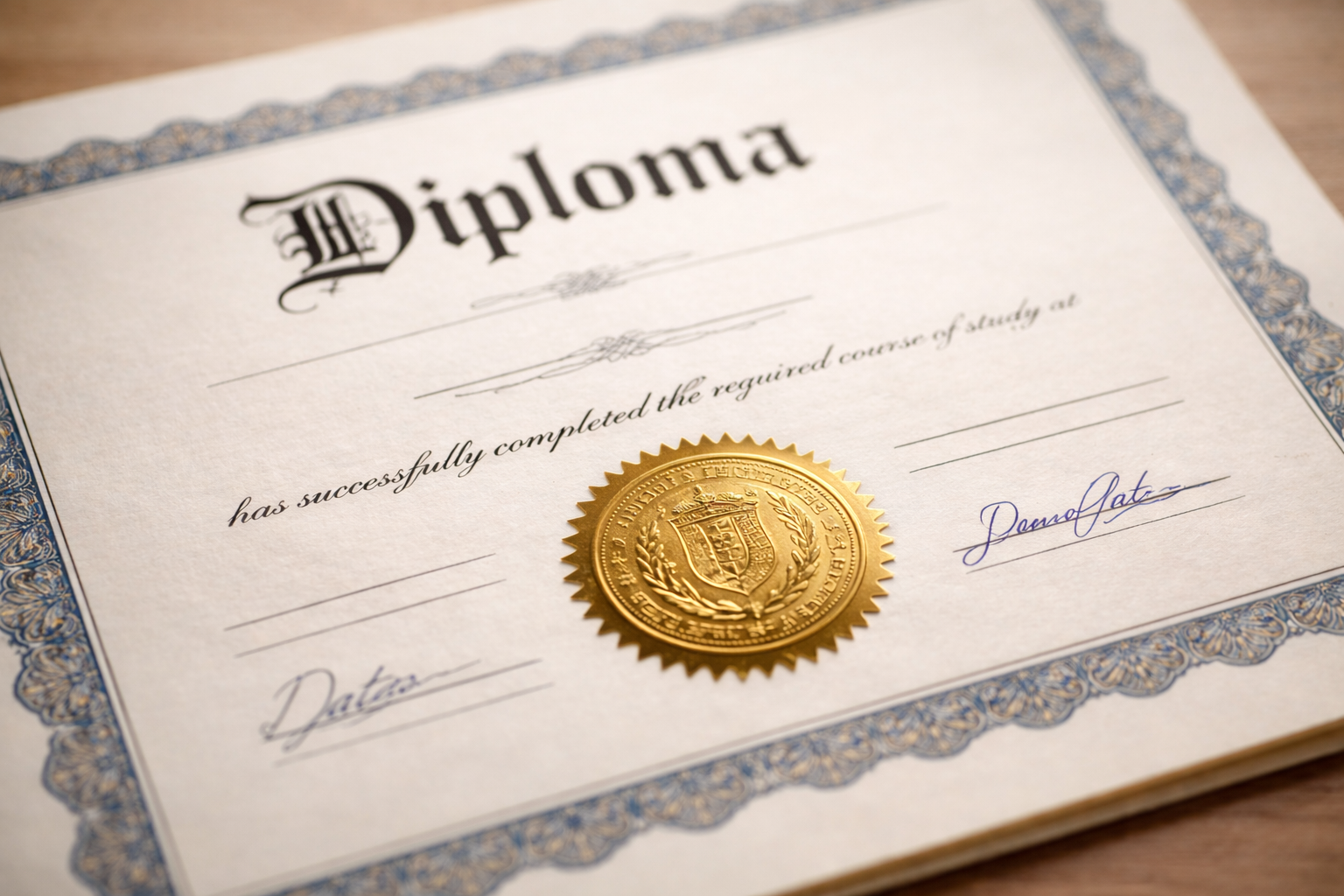
Who Should Order Education Verification
Any role where a specific degree or certification is a legal, regulatory, or operational requirement warrants education verification. The most common use cases include:
- Healthcare — nurses, physicians, therapists, and technicians are required to hold verified credentials. Hiring an unqualified candidate creates direct patient safety risk and serious liability exposure.
- Education — teachers and administrators are required to hold valid degrees. Connecticut's 16-67 verification process covers employment history, but education verification adds a separate layer of credential confirmation.
- Finance & Accounting — roles requiring CPA licensure, finance degrees, or specific certifications carry fiduciary responsibility. A misrepresented credential in this space can expose organizations to regulatory and legal risk.
- Engineering & Technology — technical roles where degree requirements are part of the job specification or professional licensure.
- Legal — paralegal, law clerk, and attorney positions where educational background is a core qualification.
How Common Is Education Fraud?
More common than most employers expect. Studies consistently find that a significant percentage of resumes contain some form of misrepresentation — and education credentials are among the most frequently inflated claims. Candidates may exaggerate their degree level, list a degree they started but never completed, or in more serious cases, fabricate credentials entirely.
The National Student Clearinghouse, which Research Services accesses where available, provides a fast and reliable database for verifying U.S. degrees. For institutions not covered by the Clearinghouse — including many international schools — our researchers contact the institution directly to confirm the information on record.
International Education Verification
Verifying credentials from international institutions adds complexity. Academic systems, accreditation structures, and recordkeeping practices vary significantly by country. Some institutions require written requests, others charge retrieval fees, and response times can be considerably longer than domestic verifications.
Research Services has experience verifying credentials from institutions across Europe, Asia, Latin America, and beyond. If an applicant attended school outside the United States, we coordinate directly with the institution to obtain the information needed — so you get a complete picture regardless of where they studied.